Full mouth restoration that saves what can be saved
A tailored mix of crowns, veneers and implants for patients who still keep several natural teeth. Rebuild function and aesthetics without extracting teeth that deserve to stay.
What full mouth restoration means
Wear, old dentistry, decay and bite collapse rarely damage every tooth equally. Full mouth restoration rebuilds the bite as one plan: crowns and veneers restore the teeth worth keeping, implants replace only those that are gone, and the bite height is set so everything works together.
This is prosthodontic work, the specialty Dr. Aguilar trained in at the University of Costa Rica before his Harvard implant program. The difference from tooth-by-tooth dentistry is the plan: one bite, designed once, instead of patches that fight each other.
The restorations are zirconia or lithium disilicate, chosen tooth by tooth: zirconia where the bite loads hardest, lithium disilicate where a front tooth has to catch light the way enamel does. Both are all-ceramic, so nothing shows a grey metal margin at the gum a few years on.
Restoration vs. All-on-6: which one?
If most of your teeth are healthy enough to save, restoration usually preserves more of you, sometimes for less. If most are failing, All-on-6 can be more predictable than heroic attempts to save everything.
The honest answer comes from diagnosis: X-rays or CBCT, gum health and the condition of each tooth. When the case is borderline, Dr. Aguilar prepares both paths with itemized estimates, so you decide informed.
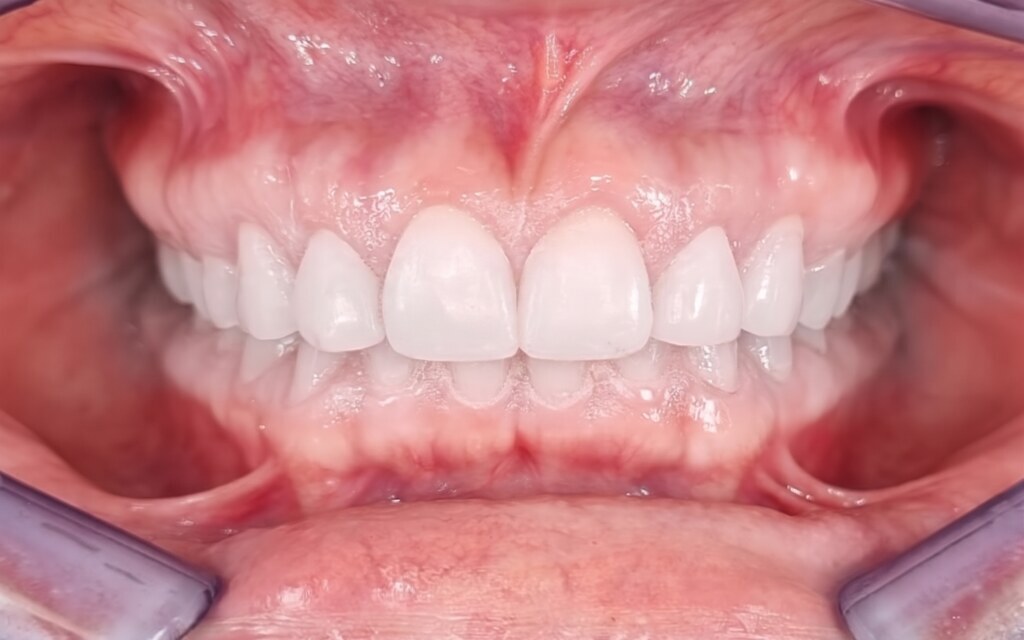 BeforeAfterBefore treatment: upper and lower front teeth worn down to short, uneven, yellowed stubs, with the bite collapsed and very little tooth showing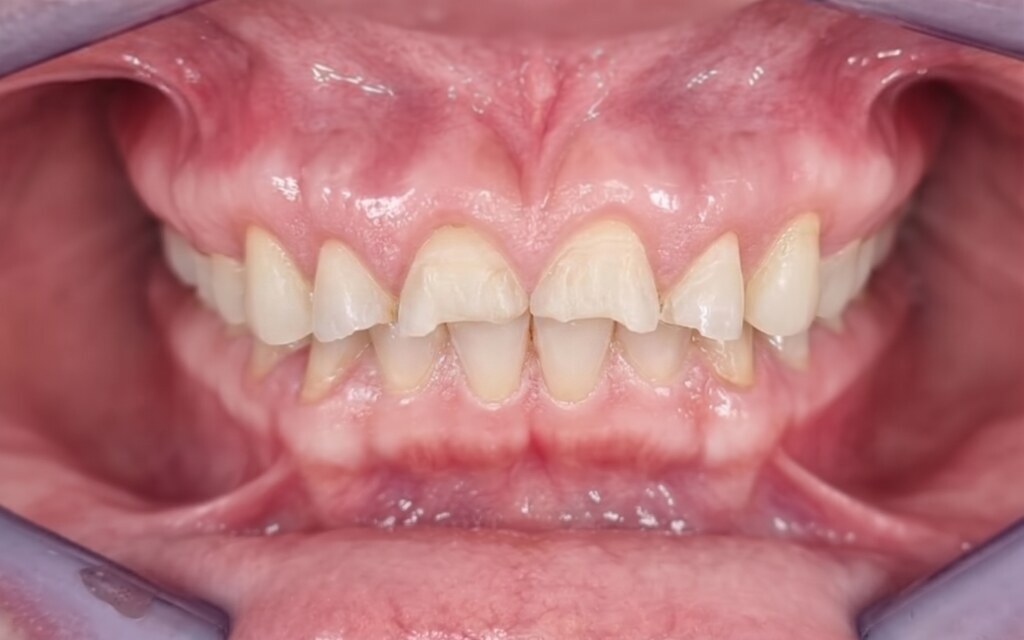
A worn-down bite rebuilt to its full height
An actual patient of Dr. Aguilar, before treatment and after the definitive restorations. The frames are cropped to match and the clinic logo overlay was removed. No tooth has been whitened, reshaped or repaired, and nothing here is AI-generated. Results vary by patient.
Is this treatment right for you?
Candidacy depends on clinical evaluation. X-rays or a CBCT scan may be needed before a final plan.
Often a good fit
- Several worn, cracked or heavily filled teeth plus some missing ones
- A collapsed or uncomfortable bite after years of wear or grinding
- Old mismatched crowns and bridges that need one coherent redo
- A desire to keep healthy natural teeth wherever possible
Needs closer evaluation
- Teeth with poor prognosis, sometimes better replaced than saved
- Active gum disease, treated before reconstruction
- Severe bone loss where implants are planned
- TMJ symptoms that may need management before bite changes
What to expect
Every case is planned individually. This is the shape most journeys take; your evaluation confirms the exact timeline.
"The treatment is fantastic, they have the right protocols! I was pleased with the work."
 Crisly Flores · Patient review
- 01
Remote evaluation
Dr. Aguilar reviews your records and maps which teeth can be saved, which need replacement, and the target bite.
- 02
Diagnosis in person
CBCT, models and photos confirm the plan; you approve the design and itemized estimate before work begins.
- 03
Reconstruction phase
Crowns, veneers and any implant placement, sequenced so you always leave with functional teeth.
- 04
Final restorations
The on-site lab delivers the definitive crowns and bridges, fitted and balanced as one bite.
- 05
Maintenance plan
Night guard when indicated, plus a care routine your home dentist can follow.
The full range, not a starting price
- All-inclusive
- Keeps the teeth worth keeping
- One plan, not tooth by tooth
- Most full-mouth cases
- $12,000 to $19,000
In the U.S. $22,000 to $80,000
U.S. figures: Medical tourism price survey, 2026
What moves the number is how many of your own teeth can be saved. Your evaluation tells you which end of that range you sit on, before you book anything.
What the price covers
- Full diagnosis with CBCT, and the bite planned as one unit
- Crowns and veneers on every tooth worth saving, in zirconia or lithium disilicate
- Implants only where a tooth is truly lost
- Restorations from the laboratory in the same building
- Your lodging for the length of the treatment
- Airport pickup and all local transport
- A bilingual coordinator, from first email to final fitting
What it does not cover
- Medication, about $150
- A sinus lift or extensive grafting, quoted by name in your estimate if your case needs it
The estimate you approve before you fly is the price you pay. If the exam changes the plan, you approve the new number first, or you walk away having paid nothing.
Request Free EvaluationAttach recent X-rays or smile photos to your request and Dr. Aguilar confirms this number for your case, in writing, before you book anything.
Common questions
How is full mouth restoration different from All-on-6?
Restoration keeps and rebuilds your savable natural teeth, adding implants only where teeth are missing. All-on-6 replaces a full arch on six implants when most teeth cannot be saved. Diagnosis decides which path fits your case.
How many trips will I need?
Cases without implants often complete in one trip of about 10 to 14 days. When implants are included, a second shorter trip after healing is typical. Your evaluation confirms the schedule.
Can you give me a cost estimate before I travel?
Yes. After reviewing your photos and X-rays you receive an itemized estimate covering each crown, veneer and implant in the plan. Final pricing is confirmed after in-person diagnosis.
What material are the crowns made of?
Zirconia or lithium disilicate, decided per tooth. Zirconia is the stronger of the two and goes where chewing force is highest; lithium disilicate is more translucent and usually wins on the front teeth, where matching how enamel handles light matters more than raw strength. Both are metal-free, which is why the gum line does not darken over the years the way it can around older metal-backed crowns.
Will my bite feel different?
Restoring worn teeth usually restores lost bite height, which most patients adapt to within days to weeks. The plan includes bite testing and adjustment; adaptation varies by patient.
Request your free dental evaluation
Send your information, photos or X-rays, and receive a preliminary recommendation from the treating doctor before you travel.
Content on this page is educational. Treatment depends on clinical evaluation, and results vary by patient.